Lost in the Pulse of Dushanbe: A Slow Traveler’s Rhythm
Imagine wandering through a city where time slows down, not because it has to, but because it chooses to. In Dushanbe, Tajikistan, every alleyway hums with quiet life—tea houses steam at dawn, artisans tap softly in courtyards, and strangers greet you like long-lost friends. This isn’t just travel; it’s presence. I came for the culture, stayed for the calm, and left with stories woven into moments, not milestones. In a world that glorifies speed, Dushanbe offers a rare invitation: to move slowly, to listen deeply, and to connect meaningfully. This is not a destination measured in checklists, but one experienced through rhythm, repetition, and resonance.
Arrival Without Rush: Stepping Into Dushanbe’s Natural Tempo
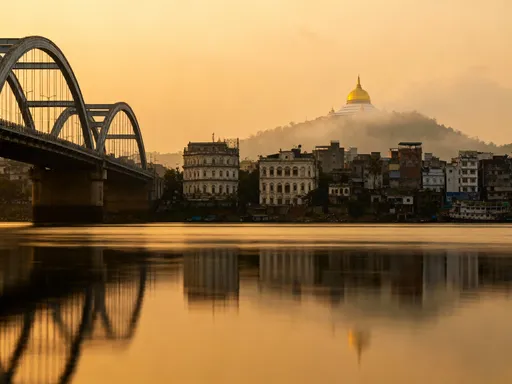
Dushanbe greets the traveler not with fanfare, but with a gentle exhale. Unlike many capital cities that launch visitors into a whirlwind of noise, traffic, and urgency, Dushanbe unfolds at a human scale. The airport, modest and efficient, delivers you directly into a city that breathes rather than shouts. Taxis wait without honking, streets flow with unhurried traffic, and the skyline—dotted with low-rise buildings and framed by distant mountains—feels open, not imposing. There is no pressure to begin, no checklist flashing in your mind. Instead, there is space.
My first day unfolded without an itinerary. I walked from the hotel into the neighborhood of Ismoili Somoni, where boulevards lined with plane trees offered shade and a soft rustle in the breeze. I passed women in long floral dresses carrying woven bags, men in simple cotton shirts sipping tea outside small shops, and children laughing as they chased a deflated ball down the sidewalk. No one seemed to be late. No one seemed to be rushing. And slowly, without realizing it, I adjusted. My steps lengthened but my pace slowed. My shoulders dropped. My gaze lifted from the map in my hand to the faces around me.
This is the first lesson Dushanbe teaches: that presence is more valuable than productivity. In a culture where hospitality is sacred and time is not commodified, the expectation to “see everything” dissolves. Instead, you are invited to simply be. To linger over a cup of tea. To accept an invitation to sit. To let curiosity—not schedules—guide your path. By resisting the instinct to plan every hour, I opened myself to serendipity: a chance conversation with an elderly man feeding pigeons, a spontaneous invitation to watch a family prepare for a weekend gathering, the quiet joy of discovering a small garden tucked behind a crumbling wall.
Travelers accustomed to ticking off landmarks may initially feel unmoored. Where are the grand monuments? The bustling tourist centers? The answer is simple: they exist, but they are not the heart of the city. The heart is in the rhythm—the daily rituals, the unspoken routines, the way life unfolds without performance. By surrendering the need for constant movement, I found a deeper kind of discovery. Dushanbe does not reveal itself to the hurried. It reveals itself to those who are willing to slow down and listen.
Chai Houses as Living Rooms: The Heartbeat of Daily Life
In Dushanbe, the chai khona is not a café—it is a living room shared by the neighborhood. These small, often unmarked teahouses are where conversations begin, friendships deepen, and time stretches like taffy. I discovered one just a ten-minute walk from my guesthouse, tucked between a tailor’s shop and a fruit stand. It had no sign, only a wooden bench outside and the constant curl of steam from a copper samovar within. On my first visit, I was handed a small glass of hot tea—dark, sweet, and fragrant with cardamom—without being asked.
Over the next several days, I returned at different hours, drawn by the warmth and the quiet hum of conversation. In the mornings, older men gathered to discuss politics and weather, their voices low and steady. By midday, mothers arrived with children, sharing plates of samsa and fresh naan. In the evenings, young couples sat close together, speaking in hushed tones. I was not an observer; I was welcomed. The owner, a man named Rahmat, began to greet me by name. He placed a second glass of tea before I could ask, accompanied by a small dish of apricot jam and a warm piece of bread.
These chai khonas are more than places to drink tea—they are social institutions. They operate on a rhythm of generosity and familiarity. No one rushes. No one checks a watch. Conversations meander. Laughter bubbles up unexpectedly. And the tea keeps flowing. I learned that in Tajik culture, offering tea is an act of respect, a gesture of openness. To refuse is to close a door. To accept is to enter a space of trust.
By returning to the same chai khona each day, I moved from guest to near-regular. A retired teacher began teaching me basic Tajik phrases. A young artist invited me to see his sketches. A grandmother shared stories of her childhood in the Fergana Valley. These were not curated experiences for tourists. They were moments of real human connection, made possible only through repetition and presence. The chai khona taught me that intimacy in travel does not come from visiting more places, but from returning to the same one—again and again—until it begins to feel like home.
Art in Plain Sight: Craftsmanship Without the Spotlight
One morning, while wandering the narrow lanes of the Old City, I turned a corner and found a man seated on a low stool, chiseling delicate patterns into a block of walnut wood. His studio was open to the street—no door, no sign, just a table, tools, and shelves lined with finished pieces: trays, boxes, and mirror frames carved with floral and geometric motifs. I paused. He looked up, smiled, and gestured for me to come closer. This was not a shop. It was a workshop. And I was not a customer—I was a guest.
For nearly an hour, I watched as he worked, explaining in broken Russian and expressive gestures how each design carried meaning—roses for love, vines for continuity, stars for protection. His hands moved with precision, yet there was no rush. When he paused to sip tea, he offered me a glass. When a neighbor passed by, they exchanged greetings and a brief joke. This was not performance. This was life—work and community intertwined.
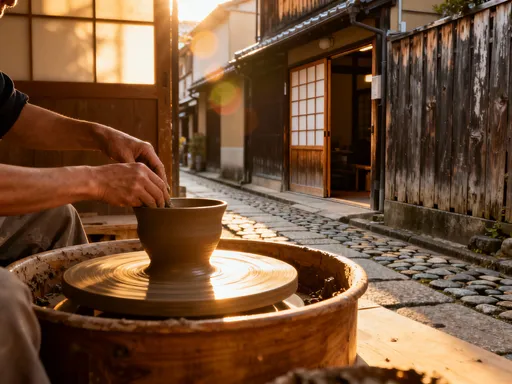
Further down the street, I found a calligrapher writing Qur’anic verses in flowing nastaliq script, his ink freshly mixed, his reed pen sharpened to a fine point. Around the next corner, a potter shaped clay on a foot-powered wheel, his son turning it steadily with a rope. These artisans were not hidden in museums or tourist bazaars. They were part of the daily fabric of the city, their skills passed down through generations, their work valued not for its market price but for its cultural weight.
Slow travel allowed me to see them—not as exhibits, but as people. I did not photograph every moment. I did not interrupt their flow. Instead, I returned the next day, then the next, building quiet rapport. I bought a small wooden box not because I needed it, but because I wanted to honor the time and care that went into it. The artisan wrapped it in brown paper, tied it with string, and said, “Khosh omadid”—you are welcome—before returning to his chisel.
In a world where mass-produced souvenirs dominate tourist economies, these encounters were a reminder of authenticity. True craftsmanship does not shout. It whispers. It reveals itself to those who are patient, who are willing to stand quietly and watch, who understand that the value of an object is not in its price, but in the story it carries. In Dushanbe, art is not confined to galleries. It is alive in the streets, in the hands of those who keep tradition breathing.
Strolling the Green Belt: Nature Woven Into the Urban Fabric
Dushanbe’s Green Belt is not a park. It is a promise—a declaration that nature belongs in the city, not as an afterthought, but as a central thread. Stretching for several kilometers through the heart of the capital, this ribbon of green connects neighborhoods, schools, and markets with tree-lined paths, flowerbeds, fountains, and open lawns. It is used not just for exercise, but for living.
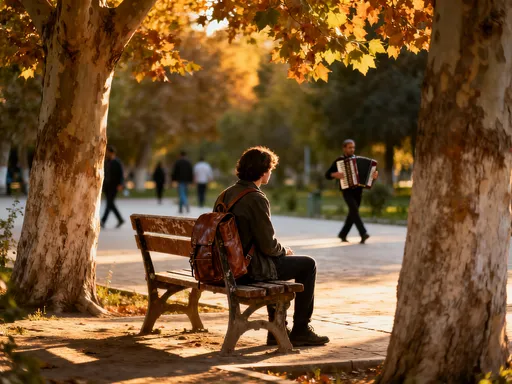
Each afternoon, I returned to the same section, near the National Library, where a row of old poplars cast long shadows and the air carried the scent of jasmine. People of all ages filled the space: elderly couples walking arm in arm, teenagers playing badminton with rackets made of wire and tape, mothers pushing strollers while talking on the phone, and men gathered around portable chess boards, moving pieces with quiet intensity. Music floated from hidden speakers—sometimes folk melodies, sometimes Russian ballads, sometimes the cheerful squeeze of an accordion.
I brought a small notebook and began to sketch—not the landmarks, but the moments. A boy balancing on a low wall. A woman feeding crumbs to sparrows. Two friends sharing a single pair of headphones. These were not grand scenes, but they were real. And in their simplicity, they revealed the soul of the city: a place that values rest, relationship, and quiet joy.
The Green Belt is more than recreation. It is a democratic space—open to all, free of charge, unmediated by tickets or reservations. It does not require consumption to participate. You do not need to buy anything to belong. This is rare in modern cities, where public spaces are often commercialized or surveilled. In Dushanbe, the Green Belt remains a sanctuary of ease.
By moving slowly through it—walking, sitting, observing—I began to absorb its rhythm. My thoughts slowed. My breathing deepened. I stopped planning my next move and simply allowed myself to be present. This is the power of well-designed public space: it does not just host life; it nurtures it. And for the traveler, it offers a rare gift—the chance to witness a city not as a tourist, but as a temporary citizen.
Market Days: Rhythm, Color, and the Music of Barter
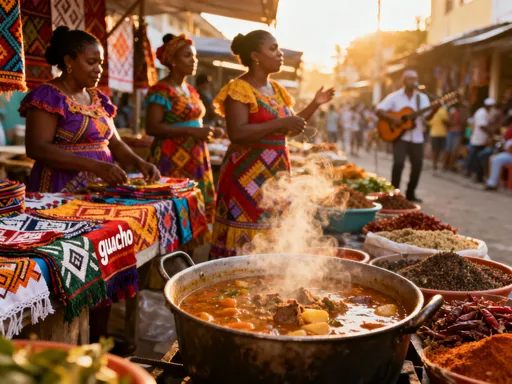
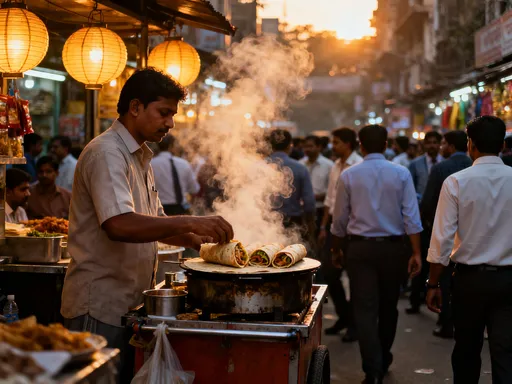
The Vakhsh Bazaar is a symphony of senses. From the moment I stepped in, I was enveloped by sound—the rhythmic call of vendors, the clink of scales, the chatter of bargaining, the occasional burst of laughter. The air was thick with the scent of dried apricots, cumin, mint, and freshly baked bread. Stalls overflowed with pyramids of pomegranates, bundles of herbs, wheels of golden halva, and bolts of embroidered fabric.
My first visit was overwhelming. I moved quickly, taking photos, trying to absorb everything at once. But by the third day, I had learned to slow down. I came in the early morning, when the market was still settling in. I watched as vendors unpacked crates, arranged fruit in careful patterns, and boiled water for their first tea. I returned in the afternoon, when the pace shifted from commerce to conversation. And slowly, I began to understand the market’s rhythm.
Each day had its own cadence. Early hours were for freshness—bread, milk, herbs. Late morning brought the spice sellers, their trays lined with saffron, turmeric, and sumac. By noon, families arrived, shopping together, tasting samples, sharing stories. In the late afternoon, the mood turned social. Vendors sat on stools, sipping tea, exchanging news. Children played between stalls, weaving through legs with fearless energy.
I began to return to the same fruit seller, a woman named Gulnara, who always saved me a piece of ripe melon to taste. When I pointed to apricots, she shook her head and pointed to tomorrow—“fresh from the south.” I learned to wait. I learned to smile before speaking. I learned that a shared piece of fruit could build more trust than a dozen transactions.
The market taught me that commerce, in Dushanbe, is not transactional—it is relational. A sale is not the end of an interaction; it is the beginning of a connection. Prices are negotiated, but not aggressively. Bargaining is a dance, not a battle. And kindness is never wasted. By returning again and again, I moved from outsider to familiar face. I was no longer just buying food—I was participating in a daily ritual, one rooted in trust, seasonality, and community.
Mountain Escapes Within Reach: Day Journeys That Breathe
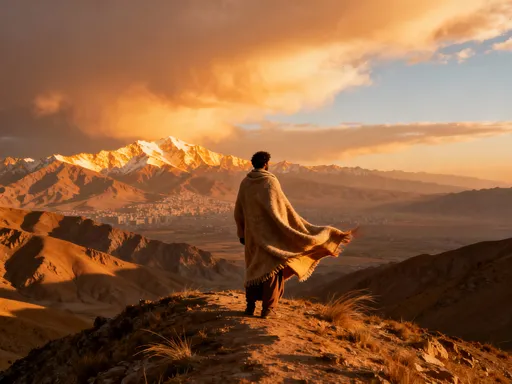
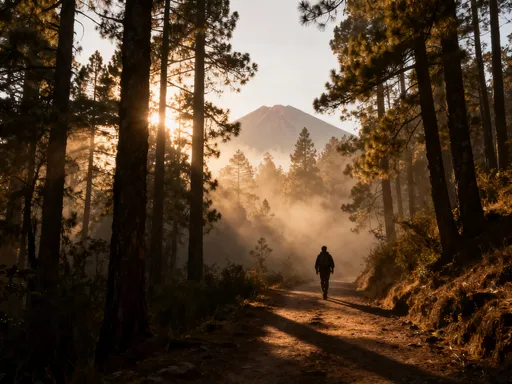
Just beyond the city’s edge, the land begins to rise. The Pamir foothills, with their rugged beauty and quiet villages, are within easy reach of Dushanbe. On a two-day journey with a local guide, I left the urban rhythm behind and entered a world of silence, wind, and open sky.
We traveled by shared minibus to the village of Sangvor, where mud-brick homes clung to the hillside and children ran barefoot through dusty lanes. Our guide, a man named Farhod who grew up in the region, led us on gentle trails through terraced fields and walnut groves. We stopped often—not to reach a summit, but to rest, to listen, to take in the view. At midday, we were invited into a home for lunch: a simple meal of qurutob, flatbread soaked in yogurt and topped with herbs, shared from a communal plate.
That night, we slept in a guesthouse with no electricity, lit only by candles and the moon. The stars were breathtaking—thick and bright, undimmed by city lights. We sat outside, wrapped in blankets, drinking green tea and listening to Farhod sing old Pamiri songs. There was no agenda. No rush. Just the deep peace of being far from noise, close to earth.
This kind of travel—low-impact, community-based, rooted in respect—is the essence of slow tourism. It does not seek to conquer nature, but to coexist with it. It supports local economies, honors cultural traditions, and leaves minimal trace. The trails were not marked with signs or ropes. The villages were not staged for visitors. What I saw was real life, unfolding as it has for generations.
By choosing this kind of journey, I learned that slow travel is not only about pace—it is about ethics. It is about asking: Who benefits from my visit? Am I a guest or an intruder? The answer, in this case, was clear. My presence supported a local guide, a family-run guesthouse, and a village economy. And in return, I received something priceless: a sense of connection to place, to people, and to the quiet pulse of the land.
The Return Home—And the Slowness That Stays
When I left Dushanbe, I did not feel tired. I did not feel the usual post-trip exhaustion that follows a whirlwind of sights and schedules. Instead, I felt replenished. Calm. Aligned. The city had not just shown me its streets and markets—it had reshaped my inner rhythm.
Back home, I noticed the change. I paused before speaking. I waited before reacting. I walked more slowly, looked more closely, listened more deeply. I began to treat my own city with the same curiosity I had brought to Dushanbe—wondering who the shopkeeper really was, what story the old building held, what melody drifted from an open window.
Slow travel, I realized, is not just a way of moving through the world. It is a way of being. It is the choice to value depth over distance, connection over collection, presence over performance. It is understanding that the richest experiences are not always the loudest or the most photographed, but the ones that settle quietly into your bones.
Dushanbe did not offer adrenaline or spectacle. It offered stillness. It offered time. It offered the radical act of doing nothing—of sitting, of sipping tea, of smiling at a stranger without expectation. And in that simplicity, I found something profound: a reminder that life is not a race, but a series of moments, each one worthy of attention.
So I invite you: the next time you travel, consider not just where you go, but how you move through it. Let go of the checklist. Return to the same place twice. Sit in the same chai khona. Learn a vendor’s name. Let the rhythm of a place seep into your step. Because sometimes, the deepest journeys are not across oceans—but into the quiet pulse of a single, unhurried day.