You Won’t Believe What Bamako’s Cultural Scene Is Hiding
I never expected Bamako to hit me this hard. It’s not just Mali’s capital—it’s a pulsing hub of art, music, and tradition that most travelers completely overlook. From open-air markets bursting with handmade textiles to intimate music halls where griots tell centuries-old stories, the city’s cultural venues are alive with soul. This isn’t just sightseeing—it’s feeling history breathe. If you’re chasing real, raw African culture, Bamako should be at the top of your list.
First Impressions: A City That Feels Alive
Arriving in Bamako is an immediate sensory immersion. The city greets you with the constant hum of motorbikes weaving through traffic, the smoky aroma of grilled meat from roadside stands, and a vibrant mix of French and Bambara floating through the air. The skyline isn’t dominated by towering skyscrapers or colonial monuments, but by the rhythm of daily life unfolding in open courtyards, bustling roundabouts, and shaded verandas where elders sip sweet mint tea. At first glance, some visitors may mistake the city’s informal energy for chaos, but within minutes, a deeper order reveals itself—one built on community, conversation, and cultural continuity.
Many come to West Africa expecting grand tourist spectacles or preserved historical sites, and while those exist elsewhere, Bamako offers something more intimate: culture in motion. Unlike capitals that present heritage behind glass, Bamako lives its traditions. Children chant proverbs on their way to school, women carry intricately patterned textiles on their heads, and musicians tune their instruments in neighborhood courtyards. These aren’t performances for outsiders; they are the everyday fabric of life. This authenticity is what makes the city so compelling—it doesn’t perform culture, it is culture.
What sets Bamako apart from other West African capitals is its role as a cultural crossroads. As Mali’s largest city, it draws people from across the country—Tuareg nomads from the north, Dogon farmers from the cliffs of Bandiagara, and Mandé traders from the south. This convergence has created a dynamic urban identity that honors roots while embracing change. The city’s energy isn’t just loud—it’s layered, with histories, dialects, and artistic expressions overlapping like threads in a handwoven cloth. For the observant traveler, every street corner offers a clue to Mali’s rich cultural mosaic.
The Heartbeat of Tradition: National Museum of Mali
At the heart of Bamako’s cultural landscape stands the National Museum of Mali, a sanctuary of memory and identity. More than just a repository of artifacts, the museum serves as a bridge between past and present, offering visitors a deep understanding of the civilizations that have shaped the nation. Housed in a striking modern building with traditional architectural elements, the museum welcomes guests with a sense of reverence and curiosity. Its collections are carefully curated to tell the story of Mali not through conquest or politics, but through creativity, spirituality, and everyday life.
Among its most treasured exhibits are the ancient manuscripts from Timbuktu, fragile yet enduring testaments to Mali’s golden age of scholarship. These handwritten texts, some dating back to the 13th century, cover astronomy, medicine, and Islamic philosophy, revealing a legacy of intellectual achievement often overlooked in Western narratives. Equally powerful are the displays of traditional masks used in spiritual ceremonies by the Dogon and Bambara peoples. Carved with symbolic precision, each mask represents ancestral spirits, natural forces, or moral lessons, and their presence in the museum underscores the living nature of Malian spirituality.
But the museum is not a static archive. It functions as a cultural classroom where schoolchildren gather for guided tours, artists study historical motifs for inspiration, and elders recognize patterns from their youth. Interactive panels and multilingual descriptions make the content accessible, while temporary exhibitions highlight contemporary interpretations of tradition. For visitors, especially those unfamiliar with West African history, the museum provides essential context—a foundation for understanding the music, art, and customs encountered throughout the city. It reminds us that culture is not just preserved; it is taught, remembered, and continually reimagined.
Music in the Air: Where Griots Keep History Alive
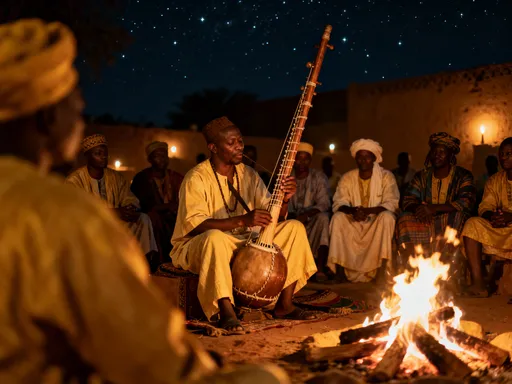
In Bamako, music is not entertainment—it is memory, identity, and social glue. At the center of this soundscape are the griots, the hereditary storytellers and musicians who have preserved Mali’s oral history for generations. Known locally as jeliw, these artists are more than performers; they are historians, diplomats, and moral guides. In a country with a long tradition of oral transmission, the griot’s voice carries the weight of lineage, recounting genealogies, celebrating heroes, and offering wisdom through song. Their presence in Bamako’s cultural venues ensures that the past remains audible in the present.
To hear a griot perform live is to witness history unfold in real time. In intimate settings like the Centre Culturel Français or open-air stages during community festivals, audiences gather under the stars to listen to tales of empires, migrations, and everyday resilience. The music is hypnotic—driven by the kora, a 21-stringed harp-lute whose shimmering tones seem to float above the rhythm, and the balafon, a wooden xylophone with gourd resonators that produces a bright, percussive melody. These instruments, crafted by hand and passed down through families, are not just tools of music but symbols of cultural continuity.
While traditional performances remain central, Bamako’s music scene also embraces innovation. Young artists blend griot melodies with jazz, reggae, and Afro-pop, creating a sound that honors the past while speaking to modern realities. Venues like the Alliance Franco-Malienne regularly host concerts where elders and youth share the stage, demonstrating how tradition evolves without losing its essence. For visitors, attending a live performance is one of the most profound cultural experiences possible—not because it is exotic, but because it is genuine. The music doesn’t perform for you; it invites you to listen, reflect, and remember.
Art That Speaks: Exploring Local Galleries and Studios
Beyond music, Bamako’s visual arts scene thrives in neighborhoods where creativity flows as naturally as the Niger River. Areas like Quartier du Fleuve and ACI 2000 are home to a growing community of painters, sculptors, and textile artists who draw inspiration from ancestral themes while experimenting with contemporary forms. Unlike commercial galleries in global art capitals, many of these spaces are modest—converted homes, open-air studios, or shared workshops where the scent of paint and wood shavings fills the air. Yet, the work produced here carries a powerful voice, reflecting both personal vision and collective memory.
One of the most striking aspects of Malian visual art is its deep connection to nature and tradition. Artists frequently use locally sourced materials—mud, clay, natural dyes, and reclaimed wood—to create pieces that feel rooted in the land. Themes of ancestry, spirituality, and daily life recur throughout the work, often rendered in bold colors and symbolic patterns. A painting might depict a grandmother teaching her granddaughter to weave, while a wooden sculpture could represent a mythological figure from Bambara cosmology. These are not decorative objects; they are narratives in form and pigment.
What makes Bamako’s art scene particularly inspiring is its accessibility. Visitors are often welcomed into studios with warmth and curiosity, invited to watch artists at work or even try their hand at basic techniques. Some cooperatives offer informal workshops where travelers can learn to carve a small mask or dye fabric using traditional bogolan methods. These interactions go beyond tourism—they create moments of connection, where cultural exchange happens organically. For women travelers especially, meeting female artists who balance creativity with family life can be deeply empowering, offering a model of resilience and expression that transcends borders.
Markets as Cultural Stages: From Grand Marché to Craft Cooperatives
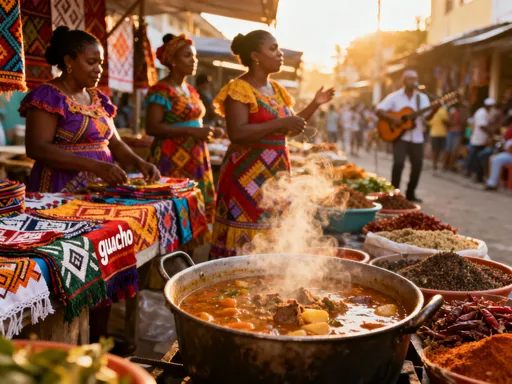
No visit to Bamako is complete without a journey through the Grand Marché, the city’s largest marketplace and one of its most vibrant cultural stages. More than a place to shop, the market is a living theater of daily Malian life. Vendors call out prices in rhythmic cadences, children dart between stalls carrying bundles of spices, and women inspect lengths of hand-dyed fabric with expert eyes. The air is thick with the scent of shea butter, dried fish, and fresh ginger, while colorful piles of textiles, pottery, and jewelry spill onto the ground beneath makeshift canopies. To walk through the market is to be immersed in the sensory language of the city.
What makes the Grand Marché especially significant is the presence of artisans actively creating their wares on-site. In designated sections, women can be seen applying intricate designs to cotton cloth using the bogolan technique—a centuries-old method of dyeing with fermented mud and plant extracts. Each pattern carries meaning, symbolizing proverbs, protection, or social status. Nearby, woodcarvers chip away at blocks of ebony and mahogany, shaping masks and figurines that will be used in ceremonies or sold to collectors. These crafts are not mass-produced souvenirs; they are handmade expressions of identity, each piece bearing the mark of its creator.
Interacting with vendors offers another layer of cultural insight. A simple conversation about the meaning of a textile pattern or the origin of a spice blend can turn into a meaningful exchange. Many sellers speak French, and some know basic English, making communication possible even for those unfamiliar with local languages. More importantly, the market operates on principles of respect and relationship—bargaining is expected, but it is done with smiles and patience, not aggression. For travelers, especially women accustomed to fast-paced consumerism, the market offers a refreshing reminder that commerce can be personal, even sacred.
Spaces of Performance: Dance, Theater, and Community Hubs
Cultural expression in Bamako extends beyond visual and musical arts into the realm of movement and storytelling. Dance and theater are vital forms of communication, used to celebrate, educate, and preserve tradition. Institutions like the Institut Français de Bamako and the Maison de la Culture host regular performances by local troupes, ranging from traditional dance ensembles in elaborate costumes to modern theatrical productions addressing social issues. These spaces serve as cultural anchors, providing artists with platforms and audiences with opportunities to engage with their heritage in dynamic ways.
One of the most unforgettable experiences a visitor can have is attending a nighttime dance festival, where drummers set a pulsating rhythm and dancers move with synchronized precision, their bodies telling stories of harvest, love, and resistance. These performances are not staged for tourists alone; they are community events, often tied to seasonal celebrations or rites of passage. When outsiders are welcomed, it is with the understanding that they come to observe and honor, not to disrupt. The energy is electric, the atmosphere communal, and the emotional impact profound.
Theater in Bamako often blends humor, music, and social commentary, making complex issues accessible to diverse audiences. Plays might address themes like women’s education, environmental conservation, or intergenerational dialogue, using local dialects and cultural references to deepen resonance. For foreign visitors, even with limited language skills, the physicality of the performances and the emotional authenticity make the messages clear. These spaces remind us that culture is not just about the past—it is a living conversation about who we are and who we aspire to be.
Beyond the Tourist Trail: Finding Authentic Cultural Moments
While guided tours and official venues offer valuable insights, some of Bamako’s most meaningful cultural moments happen off the beaten path. The key to accessing these experiences lies in respectful engagement. Learning a few basic phrases in Bambara or French—such as greetings or expressions of gratitude—goes a long way in building rapport. Asking permission before taking photographs, especially of people or sacred objects, demonstrates awareness and courtesy. Dressing modestly, particularly when visiting religious or rural sites, shows respect for local norms and helps travelers blend in rather than stand out.
The best times to visit Bamako for cultural immersion are during festival seasons, when the city’s creative spirit shines brightest. While the renowned Festival sur le Niger takes place in Segou, many of its artists perform in Bamako, and related events are held throughout the capital. These festivals bring together musicians, dancers, poets, and artisans from across Mali, creating a vibrant celebration of national identity. Attending even a small community event during this time offers a front-row seat to the country’s cultural vitality.
Equally important is the question of ethical engagement. Travelers can support local artists by purchasing directly from studios or cooperatives rather than from middlemen or souvenir shops. Participating in workshops, making donations to cultural centers, or simply sharing stories upon returning home helps sustain these traditions. For women travelers, connecting with female artisans or educators can foster deeper understanding and mutual respect. These actions, though small, contribute to a more responsible and meaningful form of tourism—one that values people as much as places.
Conclusion
Bamako isn’t a city you simply visit—you feel it. Its cultural venues aren’t static displays but living, breathing expressions of resilience and creativity. By stepping into its museums, markets, and music halls, you’re not just observing culture—you’re becoming part of its story. For travelers seeking depth over dazzle, Bamako is a revelation waiting to be heard. It challenges assumptions, awakens the senses, and reminds us that the heart of a nation beats not in its monuments, but in the hands of its artists, the voices of its storytellers, and the daily rituals of its people. To experience Bamako is to remember that culture is not something to be consumed—it is something to be lived.