You Won’t Believe the Art Hiding in This German Town’s Souvenirs
Rothenburg, Germany feels like stepping into a storybook—half-timbered houses, cobblestone lanes, and an artistic soul you can hold in your hands. I went looking for charm and found something deeper: centuries-old craftsmanship alive in every wooden nutcracker, hand-painted ornament, and local specialty. This isn’t just tourism—it’s a tactile journey through art and tradition you’ve gotta experience to believe. The town’s winding alleys don’t simply invite sightseeing; they beckon you to touch, to examine, to appreciate. Each shop window reveals more than souvenirs—they offer fragments of history, shaped by generations of hands that value patience, precision, and beauty. In a world of mass production, Rothenburg stands as a quiet testament to what endures when creativity is rooted in heritage.
Arrival in a Living Postcard
From the moment you step through the ancient gates of Rothenburg ob der Tauber, the present begins to fade. The city rises gently from the rolling hills of Bavaria, its red-tiled rooftops and timber-framed facades glowing under the soft German sun. Towering city walls, still intact after more than 800 years, encircle the old town like protective arms, preserving a way of life that time has passed by elsewhere. Walking along the cobblestone paths, you can almost hear the echo of medieval footsteps—merchants, pilgrims, and craftsmen who once shaped the rhythm of daily life here. There’s no rush, no jarring modernity to break the spell. Even the air feels different—crisp, slightly sweet with the scent of baking pastry and wood shavings.
What strikes visitors most is not just the beauty of the architecture, but how seamlessly it blends with living culture. Unlike museum cities frozen for display, Rothenburg breathes. Children run past bakeries carrying paper cones of Schneeballen, couples sip coffee on sunlit benches, and shopkeepers sweep their doorsteps as if performing a daily ritual. The visual harmony of the town—its balanced proportions, warm colors, and intricate carvings—doesn’t exist merely for show. It sets the emotional tone for deeper discovery. You come for the postcard views, but you stay for the sense of continuity, for the quiet understanding that art here isn’t confined to galleries. It’s in the door handles, the window boxes, the hand-stenciled signs above family-run workshops.
This atmosphere prepares the visitor for a shift in perspective. Instead of snapping photos and moving on, you begin to slow down, to look closer. A carved gargoyle on a corner beam isn’t just decorative—it tells a story. A hand-blown glass ornament in a shop window isn’t just shiny—it carries technique. The town doesn’t shout its artistry; it whispers it. And in that whisper, there’s an invitation: to move beyond sightseeing, to engage with the culture not as an observer, but as a witness to something enduring.
The Art of the Everyday: Specialty Products as Cultural Expressions
In Rothenburg, even the simplest items carry layers of meaning. The famous Schneeball, a deep-fried pastry dusted with powdered sugar, is more than a treat—it’s a symbol of celebration, often served at festivals and family gatherings. Its name, meaning “snowball,” comes from its fluffy, rounded shape, but its origins trace back to medieval times when bakers used leftover dough to create festive snacks. Today, variations include cinnamon, chocolate, and even liqueur-infused versions, but the method remains rooted in tradition. Each bite connects you to centuries of culinary craftsmanship, where taste and technique merge into cultural memory.
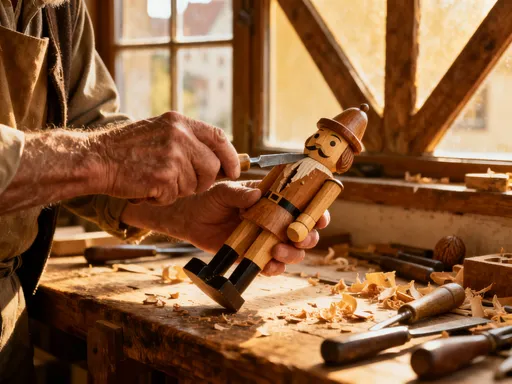
Then there are the wooden nutcrackers, often standing guard in shop windows with their bold uniforms and stoic expressions. These are not mere novelties. Inspired by 19th-century German folklore, they were once believed to bring good luck and protect the home. Carved from local alder or cherry wood, each nutcracker is shaped with care—eyes painted with precision, uniforms hand-stenciled, joints carefully hinged for smooth movement. The craftsmanship reflects a broader cultural value: the dignity of work, the pride in making something that lasts.
Similarly, the hand-painted Christmas ornaments, especially those from the town’s renowned winter markets, are more than seasonal decor. Many are crafted using techniques passed down for generations—glassblowing, hand-gilding, fine brushwork with natural pigments. A single bauble might take hours to complete, its delicate patterns echoing regional motifs: snowflakes, evergreens, or scenes from old German tales. These objects are not designed for disposal. They are heirlooms in the making, meant to be unpacked year after year, each scratch and fade adding to their story.
What makes these items truly special is that they are not separated from daily life. They aren’t locked behind glass or reserved for special occasions. A grandmother might use a wooden nutcracker at the holiday table; a child might receive a Schneeball as a reward. This integration of art into routine is a hallmark of Rothenburg’s cultural strength. The artisans who make these goods aren’t creating for tourists alone—they’re sustaining a way of life that values beauty, function, and continuity. In this way, every purchase becomes more than a transaction; it’s a small act of preservation.
Where Craft Meets Canvas: Artistic Techniques on Display
Rothenburg’s artistry isn’t just in the final product—it’s visible in the making. Small workshops tucked into narrow alleyways hum with quiet industry. Inside, the air is warm with the scent of sawdust and beeswax. A woodcarver leans over a block of spruce, chisel in hand, slowly revealing the face of a figurine. Nearby, a glassblower shapes molten glass over a flame, turning it into a shimmering ornament with steady, practiced breath. These are not performances for tourists. They are working studios where tradition is kept alive through daily repetition and meticulous attention to detail.
Woodworking, in particular, remains a cornerstone of local craft. Many artisans use hand tools passed down through families, favoring the control and intimacy they offer over machine production. The carving process begins with selecting the right wood—soft enough to shape, yet durable enough to last. Each cut is deliberate. A single mistake can ruin hours of work. Yet, in the hands of a master, the wood seems to come alive, taking on expression and character. The painted details—applied with fine sable brushes—are equally precise. Colors are often mixed by hand, using recipes unchanged for decades. This dedication to material and method transforms a simple nutcracker or candle holder into a piece of narrative art.
Equally impressive is the tradition of hand-painted ceramics and glass. In one workshop, an artist dips a fine-tipped brush into gold pigment and traces delicate vines around a blown-glass ball. The motion is slow, almost meditative. A single ornament might require dozens of brushstrokes, each one contributing to an overall harmony of design. The use of natural materials—linseed oil, plant-based dyes, hand-ground pigments—adds another layer of authenticity. These techniques aren’t just about aesthetics; they reflect a deeper philosophy: that beauty should be earned, not rushed.
Texture plays a crucial role, too. A hand-carved nativity scene invites touch—the smooth curve of a shepherd’s cloak, the rough grain of a stable wall. Even edible art, like the Schneeball, offers sensory contrast: crisp on the outside, soft within. This attention to tactile experience elevates everyday objects into multisensory works of art. Visitors often find themselves lingering, not just looking, but feeling, absorbing the care embedded in every detail. In Rothenburg, art isn’t something you merely see. It’s something you experience with your whole self.
Walking the Craft Trail: Key Streets and Markets That Tell a Story
To walk through Rothenburg is to follow a trail of artistic expression. Begin at Plönlein, the iconic square where two city walls converge around a bell tower. This postcard-perfect corner is more than a photo spot—it’s a gateway to the town’s soul. Just beyond, Kobolzeller Straße unfolds like a gallery without walls. Here, shopfronts are not just stores; they are displays of local mastery. Windows overflow with hand-carved wooden toys, rows of glass ornaments glowing like jewels, and shelves lined with spice-laden cookies wrapped in festive paper. The colors are warm—deep reds, forest greens, gold accents—that echo the seasons and the region’s natural palette.
Each shop tells a story. One might specialize in cuckoo clocks, their interiors revealing hand-painted alpine scenes and hand-forged metal weights. Another offers hand-stitched leather journals, their covers tooled with motifs inspired by medieval manuscripts. Even the packaging is thoughtful: twine instead of plastic, recycled paper stamped with custom seals. These details aren’t accidental. They reflect a commitment to sustainability and authenticity that runs deep in Rothenburg’s culture. Shopping here feels less like consumption and more like participation in a living tradition.
The seasonal rhythm of the town adds another dimension to the experience. In summer, open-air markets feature local potters, textile artists, and bakers offering fresh Schneeballen under striped awnings. The air buzzes with conversation and the clink of coffee cups. In winter, the transformation is magical. The Reiterlesmarkt, Rothenburg’s Christmas market, turns the old town into a wonderland of light and scent. Wooden stalls glow with candles, selling hand-dipped candles, spiced wine, and ornaments that catch the firelight. Carolers in traditional dress sing from balconies. The cold air sharpens the senses, making every detail—the glint of gold leaf, the crunch of snow—feel more vivid.
Yet, even in winter, the focus remains on craftsmanship. Unlike commercial holiday markets filled with imported trinkets, Rothenburg’s vendors are predominantly local artisans. Many have sold at the same stall for decades. Their presence lends continuity and trust. You don’t just buy a candle—you hear the story of the beeswax sourced from regional hives, the wicks hand-rolled by a grandmother in a nearby village. These narratives deepen the connection between object and origin, making each purchase feel meaningful. The craft trail, therefore, isn’t just a route through the town. It’s a journey through time, season, and human dedication.
Behind the Scenes: Meeting the Makers (Without Naming Specific Individuals)
One of the most moving aspects of Rothenburg is the opportunity to meet the people behind the art. In a small glassblowing studio near the town square, I watched an artisan shape a glowing orb over a flame. His hands moved with quiet confidence, turning, blowing, adjusting—each motion refined by thirty years of practice. When I asked what drew him to this craft, he smiled and said simply, “It’s not just about making something beautiful. It’s about keeping something alive.” His words carried weight. These traditions—glassblowing, woodcarving, hand-painting—are not self-sustaining. They require patience, training, and a willingness to resist the speed of modern production.
Another maker, a woodcarver in his seventies, shared that his apprenticeship began at sixteen. “My father taught me,” he said, “and his father before him. If I don’t pass this on, who will?” His workshop was filled with half-finished figures—soldiers, angels, animals—each waiting for the final strokes that would bring them to life. The tools on his bench were worn smooth by decades of use. There was no hurry in his work. He spoke of seasons, of light, of the grain of the wood as if they were collaborators. This deep respect for material and method is common among Rothenburg’s artisans. They don’t see themselves as artists in the grand sense, but as stewards of a craft.
Yet, the challenges are real. Rising costs, competition from mass-produced imports, and fewer young people entering the trades threaten the future of these traditions. Some workshops now offer short classes for tourists, not just to earn income, but to spark interest, to plant a seed. “If one person walks away inspired,” said a hand-painter of ornaments, “then the work matters.” Their resilience is quiet but profound. They aren’t seeking fame or fortune. They want to ensure that the next generation can still hold a hand-carved nutcracker, still marvel at a hand-blown star, and still feel the warmth of something made with care.
Watching their hands at work—steady, precise, marked by years of labor—was a lesson in humility and dedication. There was no grand performance, no need for applause. The art spoke for itself. And in that silence, I felt a deep respect not just for the objects, but for the lives devoted to making them. These are not just craftsmen. They are cultural keepers, preserving a legacy one chisel stroke, one brushstroke, one breath of fire at a time.
Bringing Art Home: How to Choose Meaningful Keepsakes
When it comes to souvenirs, Rothenburg offers a choice: the generic or the genuine. You can find mass-produced nutcrackers in plastic packaging, imported from factories far away. Or you can seek out the real thing—items made locally, by hand, with care. The difference is often visible. Authentic wooden figures have subtle imperfections—grain variations, slight asymmetries—that speak of human touch. Hand-painted details are crisp, not smudged, with colors that feel rich and layered. Glass ornaments show tiny air bubbles or subtle ripples, evidence of being mouth-blown rather than machine-molded.
One practical tip is to look for signs of local origin. Many genuine artisans label their work with the town’s name or include a small maker’s mark. Shops that display items in open view, rather than sealed cases, often allow closer inspection. Don’t hesitate to ask questions—reputable sellers are usually happy to explain their materials, methods, or even the history behind a design. A simple “Is this made here?” can open a conversation that deepens your appreciation.
Another clue is price. While not all expensive items are authentic, extremely low prices are often a red flag. Handcrafting takes time, and time has value. A hand-carved nativity scene will cost more than a plastic version—and it should. But the investment pays off in quality, durability, and emotional significance. These are not disposable items. They are meant to last, to be passed down, to become part of your own family’s story.
Personally, I brought home a small hand-painted ornament—a golden star with delicate red vines curling around its edges. It wasn’t the most elaborate piece I saw, but it felt right. The artist had explained how the red symbolized warmth and protection, how each star is unique because no two brushstrokes are alike. Now, when I hang it each holiday season, it’s not just decoration. It’s a reminder of the quiet workshop, the steady hands, the legacy of care. Choosing meaningful souvenirs isn’t about spending more—it’s about valuing more. It’s about bringing home not just an object, but a connection.
Why This Kind of Travel Changes You
Traveling through Rothenburg, I realized that the most memorable experiences aren’t always the grandest. They’re the quiet moments: watching a craftsman sand the edge of a wooden angel, tasting a warm Schneeball fresh from the fryer, holding a glass ornament that catches the afternoon light just so. These are not just sights to see. They are invitations to slow down, to appreciate the depth behind the detail. When you engage with handmade art, you don’t just observe culture—you feel it, touch it, take it home with you.
This kind of travel changes you because it shifts your relationship to the world. You begin to notice craftsmanship elsewhere—in a hand-thrown mug, a woven basket, a locally baked loaf. You become more discerning, more appreciative of the time and care behind true quality. You also become more conscious of your choices. Buying a locally made ornament isn’t just a personal pleasure. It’s a small act of support for sustainable traditions, for families who’ve dedicated their lives to preserving beauty in a fast-moving world.
Rothenburg doesn’t sell souvenirs. It shares its soul. Every hand-carved figure, every painted bauble, every recipe passed from one generation to the next is a thread in a larger tapestry of resilience and creativity. To visit this town is to witness how art can be both ordinary and extraordinary, how tradition can thrive when it’s lived, not just remembered. And perhaps most importantly, it reminds us that the most valuable things in life aren’t found in quantity, but in the quiet, enduring power of human hands making something beautiful—one careful stroke at a time.