Why Monteverde’s Hidden Culture Beckons Road-Trippers
Driving through Monteverde, Costa Rica, feels like slipping into a green dream. Mist curls around cloud forests, roosters crow in quiet villages, and locals smile like old friends. I went to hike and zip-line—but stayed for the culture. From family-run cheese farms to indigenous crafts, self-driving let me discover rhythms you’d miss on a tour. This is travel with soul, not just sights. The winding roads, the sudden views, the chance encounters—each mile reveals a deeper layer of life in the highlands. Unlike structured group itineraries, a road trip here allows space for spontaneity, for pulling over at a roadside market, for sharing coffee with a farmer who invites you into his kitchen. Monteverde is more than an eco-tourism icon; it is a living community shaped by history, values, and quiet resilience. And the best way to know it? Behind the wheel, with time to listen.
The Open Road to Monteverde: Why Self-Driving Changes Everything
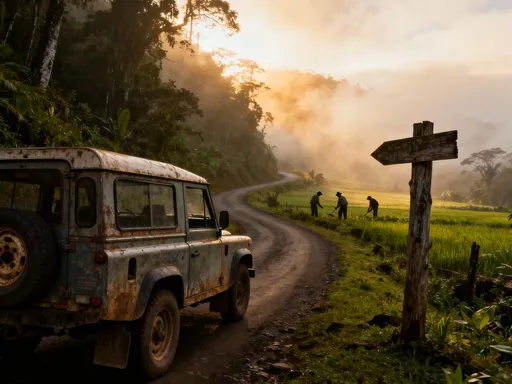
Reaching Monteverde by car is not just transportation—it is the first chapter of the journey. Most travelers begin from San José, the capital, or from La Fortuna near Arenal Volcano, both offering well-maintained highways for the first leg. The initial stretch, especially along Route 1 and then Route 141, unfolds through rolling farmland and small towns where life moves at a gentle pace. Gas stations become landmarks, roadside fruit stands tempt with pineapple and mango, and every hilltop offers a new vista. But the final approach to Monteverde demands preparation. The last 15 kilometers are unpaved, often muddy, and steep—especially during the rainy season from May to November. A 4x4 vehicle is strongly recommended, not as a luxury, but as a necessity for safety and confidence.
What sets self-driving apart is the freedom to pause. On a guided tour, stops are scheduled, viewpoints are crowded, and detours are rare. But with your own vehicle, you can pull over when a farmer waves, when children run to the roadside with handmade crafts, or when the mist clears just enough to reveal a breathtaking valley. This autonomy allows for unplanned cultural moments—conversations with locals, visits to family-run farms not listed on any tour brochure, and the chance to experience daily rhythms rather than curated performances. GPS signals can be unreliable in remote areas, so carrying a physical map or downloading offline maps is wise. Local drivers often use landmarks—'the red church,' 'the tall cypress tree'—to give directions, a reminder that this is a place where human connection still guides the way.
Driving also fosters a deeper sense of place. Instead of arriving at a destination as a sudden shift, the transition is gradual. You feel the altitude rise, see the vegetation change from tropical lowlands to cloud forest, and notice how homes shift from concrete to wooden cabins with flower boxes. These subtle shifts tell a story of environment and adaptation. The journey itself becomes educational, offering context for Monteverde’s unique culture. Moreover, self-driving supports local economies. Stopping at small roadside sodas, buying fruit from family stands, and refueling in rural towns keeps money in the community. It’s not just about convenience—it’s about participation in the region’s life.
First Impressions: Stepping Into a Living Cultural Landscape
Monteverde is often marketed as an adventure destination, famous for its canopy tours and biodiversity. But arriving by car, you see it first as a working community, not a tourist zone. The town center is modest—a cluster of family-run shops, a school with children in crisp uniforms, a church with white walls and a blue roof. There are no grand plazas or colonial facades, yet the quiet dignity of daily life is striking. Women carry baskets of produce, men repair fences with machetes, and the smell of wood smoke mingles with damp earth. This is not a preserved village for visitors; it is a real place where people live, work, and raise families.
The cultural fabric of Monteverde is uniquely layered. In 1951, a group of Quaker families from Alabama settled here, seeking peace and a place to live in harmony with nature. They brought dairy farming, a commitment to education, and a deep respect for the environment. Over time, their values merged with those of indigenous communities, particularly the nearby Maleku people, and with mestizo families who have farmed these highlands for generations. Today, this blend shapes Monteverde’s identity—conservation is not just policy, but a way of life. You see it in the community-run reserves, the emphasis on organic farming, and the bilingual schools where children learn both Spanish and English.
Walking through the town, you notice symbols of this heritage: a small Quaker meeting house tucked among trees, a mural depicting local wildlife and native plants, a sign for a women’s weaving cooperative. These are not tourist attractions but expressions of community pride. Children greet visitors with shy smiles, teachers walk home with stacks of papers, and elders sit on porches watching the world pass by. The pace is unhurried, the air is cool, and there is a sense of calm that comes from living in balance with nature. For the road-tripper, this is the first gift of the journey—not the thrill of the zip-line, but the quiet realization that you are entering a place with deep roots and strong values.
Beyond the Canopy: Cultural Experiences That Ground the Journey
While the cloud forest canopy draws many to Monteverde, the true cultural heart lies closer to the ground. Away from the main trails and ticketed parks, small-scale experiences offer deeper connections. One of the most meaningful is a visit to a family-run dairy farm. The Quaker settlers introduced cheese-making to the region, and today, several families continue the tradition. At one such farm, a third-generation cheesemaker welcomed us with a warm handshake and an invitation to the milking barn. We watched as cows were brought in, listened to the rhythm of the milking machines, and learned how milk is turned into creamy white cheese using methods passed down for decades.
What made the visit special was participation. We were invited to stir the curds, press the cheese into molds, and even label the final product. The farmer’s daughter explained how each batch is named after a family member, a tradition that honors their lineage. This was not a staged demonstration but a real moment in the daily work of the farm. Such hands-on experiences create lasting memories and foster respect for the labor behind local food. Unlike buying cheese in a shop, making it with your own hands creates a personal bond with the people and the land.
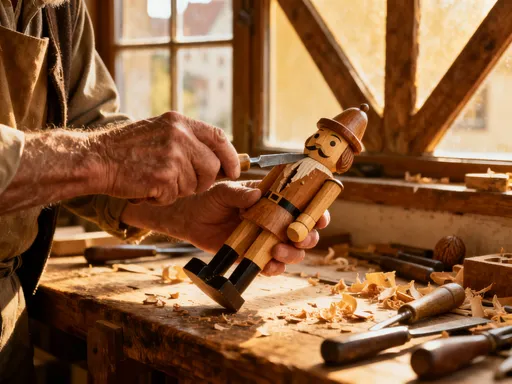
Another profound experience is visiting artisan workshops. In a small wooden cabin near the edge of town, a craftsman demonstrated how he carves traditional wooden flutes and marimbas from native cedar. Each instrument takes days to complete, shaped by hand and tuned by ear. He spoke of music as a bridge between cultures—how indigenous rhythms blend with folk melodies brought by settlers. Nearby, a women’s cooperative weaves colorful bags and table runners using a foot-powered loom. Patterns are inspired by nature: toucans, orchids, and swirling mist. Visitors can try weaving a few rows, feeling the tension of the threads and the rhythm of the shuttle. These moments of creation are not just educational—they are deeply human, connecting traveler and maker through shared effort and attention.
Voices of the Community: Conversations That Stay With You
Some of the most powerful moments on the road are the simplest: a conversation over coffee, a story shared on a porch, a question answered with unexpected depth. In Monteverde, these exchanges are not rare—they are woven into the fabric of daily life. One morning, at a small soda near a crossroads, we struck up a talk with an older man eating gallo pinto. He introduced himself as Luis, a retired biology teacher who had helped establish one of the first community reserves. Over coffee, he spoke of the early days—how locals banded together to protect the forest from logging, how they learned to identify bird species, and how they taught their children to value conservation.
His pride was palpable, not boastful but quiet and steady. He described how the reserve now supports hundreds of species, including the endangered golden toad, once thought extinct. But more than facts, he shared a philosophy: that land is not a resource to be used, but a partner to be respected. This idea echoed in other conversations—a young guide who spoke of his grandfather’s stories about the forest, a shopkeeper who explained how her family grows organic vegetables without chemicals, a school principal who described how students plant trees each Earth Day. These voices reveal a culture shaped by stewardship, education, and intergenerational care.
What makes these talks possible is the time that self-driving allows. On a group tour, you move quickly from site to site. But with your own schedule, you can linger, return to the same soda, or stop by the same farm twice. Relationships build slowly. A wave becomes a greeting, a greeting becomes a chat, a chat becomes an invitation. One afternoon, the cheesemaker’s wife invited us to her kitchen to try empanadas made with their cheese. There, over tea, she spoke of raising four children in the mountains, of power outages during storms, of the joy of seeing her grandchildren learn to milk cows. These are not stories for brochures—they are the quiet truths of life in Monteverde, shared because trust has been earned through presence and patience.
Local Flavors on the Route: A Culinary Pulse Along the Way
Food is one of the most direct paths to understanding a culture, and in Monteverde, every meal tells a story. Along the roads leading to the highlands, small stands and family-run sodas serve dishes made with ingredients grown nearby. The most iconic is gallo pinto, a mix of rice and beans sautéed with onions, peppers, and a touch of Lizano sauce—a tangy, slightly sweet condiment found in nearly every Costa Rican kitchen. Served with fried plantains, eggs, and sour cream, it is a hearty breakfast that fuels farmers and travelers alike.
Another staple is the casado, a balanced plate that reflects the country’s agricultural richness. It typically includes rice, black beans, salad, sweet plantains, and a protein—often grilled chicken or fish, but in Monteverde, sometimes local cheese or a pork stew slow-cooked with herbs. What makes these meals special is not just the taste, but the setting. Eating at a roadside soda, you sit on a wooden bench, listen to the radio playing folk music, and watch neighbors come and go. The owner might bring extra tortillas “for the road,” or offer a slice of fresh papaya “from the tree out back.” These gestures are not service—they are hospitality, a way of welcoming guests into the rhythm of daily life.
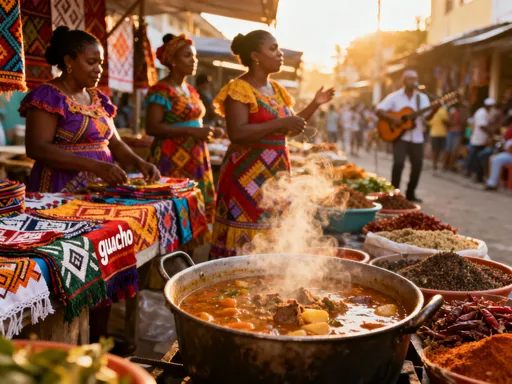
Along the route, other flavors emerge. A stand near a school sells fresh sugarcane juice, pressed on the spot and served over ice. At weekend markets, women offer homemade cheese, honey from local hives, and baked goods like bizcocho, a moist cake flavored with cinnamon and citrus. In Monteverde itself, some families run small cafés that serve coffee grown on nearby slopes. The beans are roasted in small batches, the aroma rich and earthy. Drinking it, you taste not just the bean, but the altitude, the mist, the care of the farmer. These culinary moments are not side attractions—they are central to the journey, grounding the traveler in the real, lived experience of the region.
Responsible Travel: Respecting Rhythms, Supporting Communities
With the freedom of self-driving comes responsibility. Monteverde’s beauty and culture are fragile, sustained by careful stewardship and community effort. Travelers have a role in preserving this balance. One of the most important practices is staying on designated roads and trails. The soil in cloud forests is delicate, and off-road driving can cause erosion and damage to plant roots. When stopping to view wildlife or take photos, it is best to park completely off the road and avoid blocking access for locals. Noise should be kept to a minimum—honking is rare in these quiet hills, and loud music disrupts both people and animals.
Supporting the local economy in ethical ways is equally vital. Instead of buying souvenirs from large gift shops, seek out community-run cooperatives and family artisans. Purchasing a handwoven bag directly from the weaver ensures that the full value goes to the maker. Visiting community-managed reserves, such as the Monteverde Cloud Forest Reserve or the Children’s Eternal Rainforest, supports conservation and education. These sites are not just tourist attractions—they are funded by locals and often employ guides from the area, providing jobs and incentives to protect the land.
Photography, too, requires sensitivity. While it is tempting to capture every moment, it is important to ask permission before photographing people, especially children and elders. In some cases, a smile and a nod are enough; in others, a brief conversation builds trust. Respecting privacy is not just polite—it honors the dignity of the community. Travelers who approach with humility, curiosity, and kindness are often welcomed more deeply. They are seen not as outsiders, but as guests who care. This mutual respect is the foundation of meaningful travel—one that leaves no harm and creates lasting goodwill.
Why This Road Matters: Reimagining Travel Through Culture and Motion
The journey to Monteverde by car is more than a route—it is a reimagining of what travel can be. In an age of fast itineraries and photo-chasing, this road offers a different rhythm. It invites slowness, presence, and connection. The real destination is not a zip-line or a scenic overlook, but the moments in between: the shared meal, the handmade cheese, the story told on a porch. These are the experiences that stay with you, not because they are dramatic, but because they are true.
Self-driving enables this depth. It allows you to move at the pace of life, not tourism. You see how people live, what they value, how they care for their land and each other. You begin to understand Monteverde not as a place to visit, but as a community to learn from. Its culture—rooted in Quaker simplicity, indigenous wisdom, and environmental stewardship—offers lessons in sustainability, resilience, and quiet joy. These are not abstract ideas, but lived realities, visible in every garden, every school, every handshake.
And so, the road becomes a teacher. It shows that travel is not about collecting sights, but about building understanding. It reminds us that the world is made of people, not just places. In Monteverde, the mist may obscure the view, but it also clears the mind. It slows you down. It makes you listen. And in that stillness, you find the heartbeat of a place—not in the roar of a crowd, but in the quiet hum of daily life. For the road-tripper willing to go slowly, to stop often, to open their heart, Monteverde offers not just a journey, but a transformation. The road beckons—not to the edge of the forest, but to the center of connection.