You Won’t Believe These Hidden Architectural Gems in New Orleans
New Orleans isn’t just about jazz and beignets—its streets are a living museum of architectural magic. I wandered for days, stunned by ornate ironwork, colorful Creole cottages, and centuries-old mansions whispering stories of the past. What makes its architecture truly special? It’s the mix of French, Spanish, Caribbean, and American influences stacked side by side. From the narrow alleys of the French Quarter to the shaded boulevards of the Garden District, every neighborhood tells a different chapter of the city’s layered history. The buildings here don’t just stand—they breathe, evolve, and endure. If you know where to look, every corner reveals a new detail. Let me show you how to see the city like an insider.
The Soul of the City Lives in Its Streets
New Orleans’ architecture is not simply a collection of old buildings; it is the physical embodiment of its cultural soul. Founded in 1718 by the French, the city changed hands between colonial powers, passing from French to Spanish, then briefly back to French rule before becoming part of the United States in 1803. Each regime left behind not just laws and languages, but lasting imprints on the city’s built environment. This layered history is visible in the very fabric of its neighborhoods, where a single block might contain a French-inspired cottage, a Spanish colonial courtyard, and an American-style townhouse—all standing shoulder to shoulder. The result is a streetscape unlike any other in North America, one that tells a story not through textbooks, but through brick, wood, and iron.
Geography and climate played just as crucial a role in shaping these structures as culture did. Built largely below sea level and surrounded by water, New Orleans has always faced the threat of flooding and high humidity. In response, early builders developed practical yet elegant solutions. Raised foundations lifted homes above flood-prone ground, while wide porches and tall windows promoted cross-ventilation in the sweltering heat. The use of stucco in Spanish-era buildings helped insulate interiors, and the placement of cisterns in courtyards ensured access to rainwater during dry periods. These weren’t just design choices—they were adaptations for survival in a challenging environment, refined over generations into a distinctive architectural language.
Walking through neighborhoods like the French Quarter or the Garden District feels like flipping through a living history book. Each era of the city’s past is preserved in its structures, from 18th-century Creole cottages with their steeply pitched roofs to 19th-century Greek Revival mansions with grand columns. Even today, new construction in historic districts must adhere to strict guidelines to maintain the city’s architectural continuity. This respect for preservation ensures that the soul of New Orleans remains visible in its streets, where every balcony, shutter, and roofline carries meaning. For visitors, understanding this context transforms a simple walk into a journey through time.
French Quarter: Where Iron Tells Stories
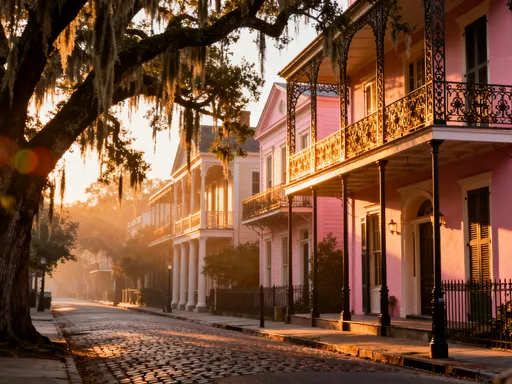
The French Quarter, or Vieux Carré, is the historic heart of New Orleans and perhaps the most visually striking example of its architectural heritage. Here, the air feels thick with history, and the buildings seem to lean in, whispering secrets from centuries past. The most iconic feature of this neighborhood is its elaborate wrought-iron balconies, which spiral and curl like lace against the sky. These ornamental railings are not merely decorative; they represent a fusion of European craftsmanship and local adaptation. Originally influenced by French and Spanish design, the ironwork was later refined by skilled Creole and African-American artisans, many of whom were trained in metalworking traditions brought from the Caribbean and West Africa.
The Great Fire of 1794 was a turning point in the Quarter’s architectural evolution. Before the fire, most buildings were constructed of wood and highly vulnerable to flames. Afterward, Spanish authorities mandated that new construction use stucco-covered brick, which was more fire-resistant. This regulation gave rise to the thick-walled, courtyard-centered buildings that define the area today. Interior courtyards, often hidden behind high walls, provided private outdoor space and helped cool homes through natural airflow. Many of these courtyards still contain fountains, gardens, or even small kitchens, preserving a way of life centered around family and community.
Two distinct types of townhouses dominate the French Quarter: Creole and American. Creole townhouses, built before the 1830s, typically feature a single room deep design with rooms arranged one behind the other. The main parlor faces the street, often with French doors opening onto the balcony. These homes usually have a raised basement and a steeply pitched roof, reflecting French and Caribbean influences. In contrast, American townhouses, built after the Louisiana Purchase, are wider and often two rooms deep, with a central hallway. They tend to have flatter roofs and more symmetrical facades, reflecting Anglo-American architectural tastes.
For visitors, the best time to appreciate the Quarter’s ironwork is early in the morning or late at night, when the crowds have thinned and the gas lamps cast a golden glow on the balconies. The play of light and shadow reveals intricate details—scrolls, fleur-de-lis motifs, and even hidden symbols—that are easy to miss in daylight. Some balconies feature small openings known as “kissing holes,” allowing residents to pass messages or even share a discreet kiss without opening the door. These small touches add a layer of romance and mystery to the streetscape, reminding us that architecture is not just about structure, but about human connection.
Beyond the Quarter: Garden District’s Grandeur
Just a short streetcar ride from the bustling French Quarter lies the Garden District, a neighborhood of quiet elegance and stately beauty. Lined with centuries-old live oaks draped in Spanish moss, its wide avenues feel like something from a Southern novel. This area flourished in the mid-1800s, when wealthy merchants and plantation owners built grand homes that showcased their prosperity. Unlike the dense, inward-facing structures of the Quarter, the Garden District’s mansions are designed to be seen, with expansive front lawns, wraparound verandas, and elaborate gardens that spill onto the sidewalks.
The architectural styles here reflect the tastes of the 19th century, particularly Greek Revival and Italianate. Greek Revival homes are distinguished by their tall, white columns, pedimented gables, and symmetrical facades—evoking the grandeur of ancient temples. Italianate influences appear in rounded windows, decorative cornices, and tall, narrow towers called campaniles. Many homes also feature mansard roofs, a nod to French Second Empire design, illustrating how European trends continued to influence New Orleans even as it became more Americanized.
One of the most fascinating residential types in this area is the double-gallery house, a variation of the townhouse with two stories of covered porches supported by columns on both sides. These galleries were not just aesthetic features—they served as outdoor living rooms, where families could gather to escape the heat and observe street life. The design allowed for maximum airflow and shade, essential in a city without air conditioning. By contrast, single-gallery houses and townhouses often indicate later construction or more modest means, offering subtle clues about the social history of the neighborhood.
St. Charles Avenue, one of the oldest and most scenic streets in the city, cuts through the heart of the Garden District and offers a moving panorama of architectural history. Riding the historic St. Charles streetcar along this route provides a unique perspective, allowing visitors to see how homes transition from grand mansions to more modest residences. The streetcar itself, with its wooden benches and brass fixtures, feels like a relic from another era, enhancing the sense of time travel. For those who prefer to explore on foot or by bike, the quiet side streets reveal even more detail—hand-painted signs, wrought-iron fences, and gardens bursting with azaleas and camellias.
Color, Wood, and Whimsy: The Rise of Creole Cottages and Shotguns
While the mansions of the Garden District capture the imagination, the true backbone of New Orleans’ residential architecture lies in its more humble structures: the Creole cottage and the shotgun house. These narrow, wooden homes, often painted in bright blues, yellows, and greens, define much of the city’s residential landscape. Far from being afterthoughts, they are masterpieces of practical design, shaped by climate, culture, and necessity. Their enduring presence speaks to a tradition of resilience and ingenuity that continues to define New Orleans.
The Creole cottage, dating back to the early 1800s, is typically one to one-and-a-half stories tall, with a steeply pitched roof and a full front porch supported by simple columns. Built close to the street, these homes often have the front door opening directly into the parlor, with other rooms arranged in a linear fashion behind it. This layout, known as a “sidehall” plan, maximizes space on narrow urban lots. Many cottages also feature raised basements, which protect against flooding and improve ventilation—a critical adaptation in a city prone to heavy rains and high water tables.
Even more iconic is the shotgun house, a narrow, rectangular home that typically spans 12 to 14 feet in width but can extend 60 feet or more in length. The name comes from the idea that a bullet fired through the front door could travel straight through every room and exit the back door—there are no hallways. This linear design wasn’t whimsical; it was highly functional. In the days before air conditioning, the layout allowed breezes to flow unimpeded from front to back, cooling the interior naturally. Most shotguns have a front porch, sometimes called a “stoop,” which serves as an extension of the living space, a place for neighbors to chat or children to play.
These homes were originally built for working-class families, freed people of color, and immigrants, making them an important part of the city’s social history. Over time, they have been preserved and restored, with many now serving as charming, personalized residences. Their vibrant colors are more than decorative—they reflect Caribbean and West Indian influences, where bright hues were believed to ward off evil spirits or simply bring joy to everyday life. Today, spotting a row of shotguns in different colors is one of the most delightful experiences a visitor can have, a testament to how beauty and practicality can coexist in urban design.
How to Spot the Details That Matter
To truly appreciate New Orleans’ architecture, one must learn to look beyond the surface. The city rewards close observation, and even small details can reveal centuries of history. Begin with the roofline: steeply pitched roofs are often a sign of French or Creole influence, designed to shed heavy rain, while flatter roofs suggest Spanish or American construction. Look at the windows—transom windows above doors allowed hot air to escape, while tall, double-hung sash windows facilitated airflow. The placement of shutters, whether functional or decorative, also offers clues about a building’s age and original purpose.
Ironwork is another rich source of information. While all the balconies may look similar at first glance, there are key differences between wrought iron and cast iron. Wrought iron, used in the 18th and early 19th centuries, is hand-forged and tends to have a more organic, flowing appearance. Cast iron, introduced in the mid-1800s, is mass-produced and often features repetitive, intricate patterns. Many of the ornate railings in the French Quarter are actually cast iron, imported from foundries in Pittsburgh and New York, then assembled locally. Spotting these differences adds depth to your understanding of the city’s industrial and artistic history.
Interior details, when visible through open doors or windows, can also tell a story. Ceiling medallions, often found around chandeliers, were a mark of wealth and refinement. Brick patterns in walls—such as American bond or French bond—can indicate the period of construction and the origin of the builders. Even the shape of columns on porches can signal architectural style: Doric columns suggest Greek Revival, while scrolled capitals point to Italianate or Victorian influences.
For those who want to go deeper, carrying a small notebook or sketchpad can enhance the experience. Drawing a balcony or tracing a window pattern helps commit it to memory and encourages mindfulness. Photography is, of course, a wonderful way to capture these details, but it should be done respectfully—never trespassing or disturbing residents. Some of the most beautiful homes are private residences, and their owners appreciate quiet admiration from the sidewalk. By training your eye to notice these subtle features, you transform from a casual observer into a true architectural explorer.
Best Times, Routes, and Local Insights for Maximum Impact
Timing and route planning can make a significant difference in how you experience New Orleans’ architectural treasures. For optimal light and fewer crowds, aim to explore the French Quarter and Garden District in the early morning, between 7:00 and 9:00 a.m. The soft, golden light enhances the textures of stucco and iron, and the streets are quiet enough to hear the rustle of leaves and the distant chime of church bells. Late afternoon, just before sunset, offers another beautiful window, with warm, slanted light illuminating facades and casting long shadows that highlight architectural depth.
The St. Charles Avenue streetcar remains one of the best ways to see a wide variety of historic homes in a single journey. Running from the Central Business District through the Garden District and Uptown, it passes dozens of grand mansions and well-preserved townhouses. Because the streetcar moves slowly and stops frequently, it allows for relaxed observation. Consider bringing a guidebook or using a self-guided audio tour to identify notable homes along the route. For a more immersive experience, rent a bike and explore the side streets at your own pace. Quiet neighborhoods like the Irish Channel and Lower Garden District offer rich architectural detail without the tourist congestion.
Combining architecture with local culture enhances the journey. Plan breaks at neighborhood cafes—Magazine Street is lined with independent coffee shops, bakeries, and boutiques where you can rest and recharge. Try a café au lait and a beignet at a local spot near Lafayette Square, then continue your walk with renewed energy. These pauses not only provide comfort but also create natural rhythm in your exploration, allowing time to reflect on what you’ve seen.
One of the most valuable resources for deepening your understanding is the local people. Residents often take pride in their homes and neighborhoods and may be happy to share stories if approached politely. A simple “I love your porch—do you know how old the house is?” can open a conversation that leads to unexpected insights. Many long-time residents have lived in their homes for decades and can speak to changes in the neighborhood, restoration efforts, or family histories tied to the architecture. These personal connections add a human dimension to the buildings, transforming them from static structures into living parts of the community.
Why Preserving These Buildings Matters—And How You Can Help
The architectural heritage of New Orleans is not just beautiful—it is fragile. These buildings, many over a century old, face ongoing threats from climate change, urban development, and the passage of time. Rising humidity, frequent storms, and flooding put constant stress on foundations, woodwork, and masonry. Hurricanes like Katrina in 2005 caused widespread damage, and while many homes have been restored, the risk remains ever-present. At the same time, pressure to modernize or redevelop can lead to the demolition of historic structures, erasing irreplaceable pieces of the city’s identity.
Thankfully, strong preservation efforts are in place. New Orleans has multiple historic districts, including the French Quarter and Garden District, where strict regulations protect building facades and major architectural features. Organizations like the Preservation Resource Center and the Vieux Carré Property Owners, Residents, and Associates (VCPORA) work tirelessly to advocate for responsible restoration, provide technical assistance, and educate the public about the value of historic architecture. Their efforts ensure that renovations respect original materials and design, maintaining the authenticity of the city’s streetscapes.
Visitors play a crucial role in this preservation story. Responsible tourism means respecting private property, avoiding graffiti or vandalism, and supporting local businesses and guided tours that contribute to the community. Choosing to stay in historic bed-and-breakfasts or hiring local tour guides helps fund conservation efforts indirectly. Even simple actions—like not leaning on iron railings, staying off private lawns, and disposing of trash properly—make a difference in protecting these delicate environments.
Ultimately, the architecture of New Orleans is more than a backdrop for photos; it is a testament to resilience, creativity, and cultural continuity. Each building carries the imprint of those who designed, built, and lived in it, forming a collective memory written in brick and wood. By learning to see these details, visiting with care, and supporting preservation, you become part of that story. When you leave the city, you won’t just carry photographs—you’ll carry a deeper appreciation for a place that honors its past in every beam, every balcony, and every blooming garden.